
How to Use Philips Avent Pacifiers to Support Healthy Oral Growth
BabySooth | Learn how to use Philips Avent pacifiers to support healthy oral growth with tips on sizes, cleaning, soothing, and safe pacifier habits.
Being a parent, you desire the best of your small one, and it implies making such decisions that ensure both comfort and well-being in the long-term. Pacifiers can be considered as the means of merely calming down your baby, yet when they are properly selected and used, they serve a significant purpose in the oral development of your baby. Philips Avent pacifiers are created keeping the use and oral well-being in mind, thus making them a reliable option among the families all over.
A pacifier when used properly can assist your infant to self-soothe, sleep more comfortably and feel safe even as it promotes the natural development of the jaw and palate. Philips Avent has a number of choices based on the various phases of your babies development and each variant is designed to help maintain the health of the mouth, and the reduction of future dental problems. I am going to show you in this guide how to put these pacifiers to good use, their peculiarities, and how to create the healthy habits that will help your baby live and develop comfortably.
The importance of Oral Growth in Early Development
The initial months and years of the baby life are important in the development of the oral and the dental. The jawbone, gums, and palate are still soft and developing at this age and this fact indicates that whatever you use to suck or console your baby may have a lasting effect. An improperly made pacifier may cause pressure on the gums or the palate in a manner that may influence the alignment of the teeth in the future.
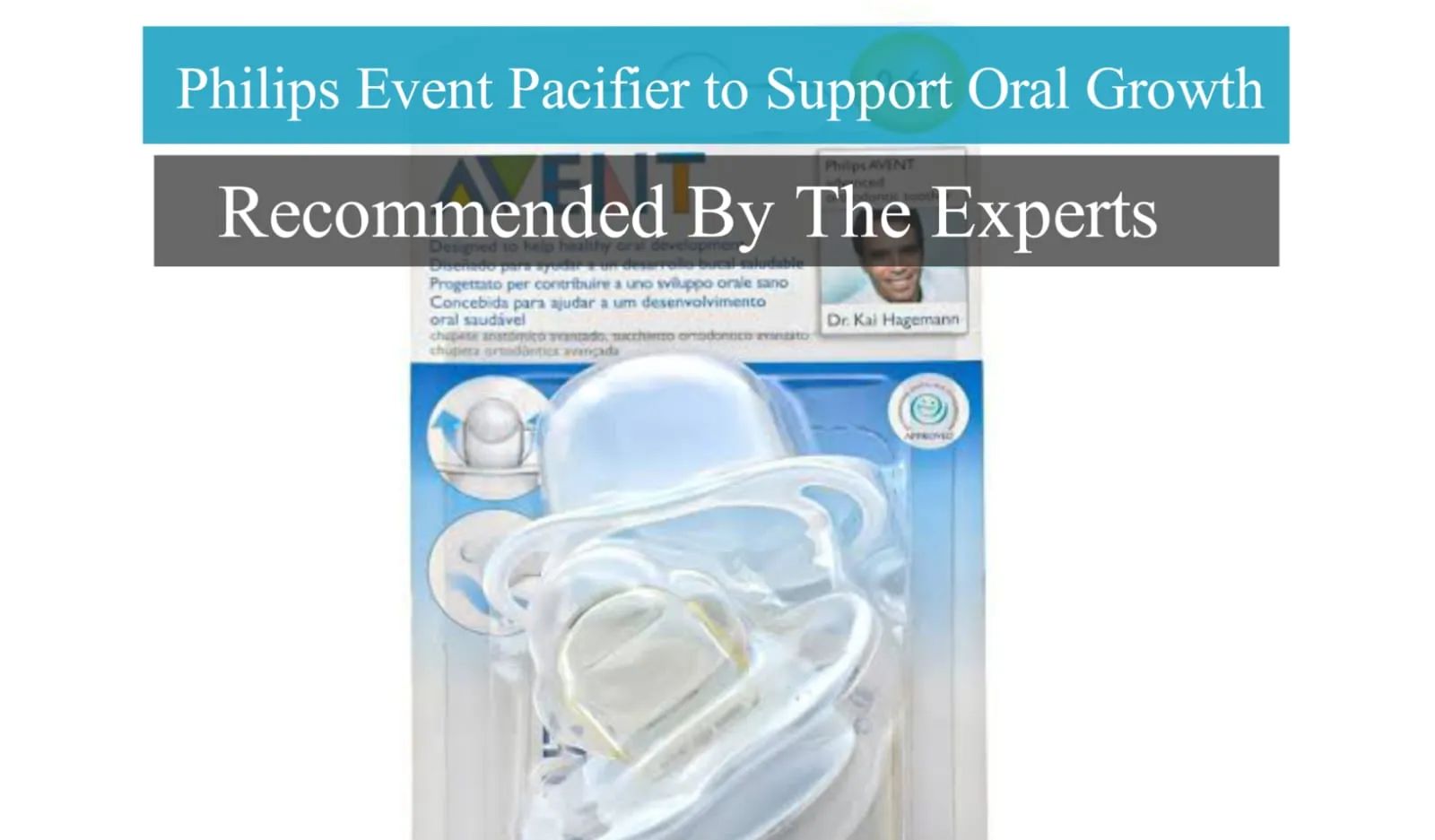
The pacifiers of Philips Avent are made with orthodontic designs that aid in a natural direction to oral development. Their symmetrical nipples are the reason why regardless of how your baby positions the best pacifier in his or her mouth; the pressure is evenly spread on the palate and the gums. This will minimize the chances of inequality development and contribute to a healthier future in terms of teeth. As parents, knowing why these minor decisions are important will put your mind at rest that you are preparing your baby to grow healthy since early childhood.
The Philips Avent Pacifiers have features that distinguish it
The difference between Philips Avent pacifiers and most of the ordinary models is the consideration of their orthodontic advantages. The pacifiers nipples consist of soft, medical-grade silicone which tastes and smells free, which makes it more likely to be accepted by babies. The silicone is also hard enough to give mild resistance that facilitates an appropriate sucking behavior but does not strain the developing jaw.
The other notable characteristic is the symmetrical design. Philips Avent pacifiers may be worn in either direction as opposed to the normal pacifiers that may only fit in one position. This means that the baby will not need to continuously change and this will aid in avoiding bad sucking habits that may disrupt oral development. Most of the models also have ventilation holes on the shield to ensure that there is flow of air to keep the skin of the baby dry and to minimize irritation of the mouth. These features combined together form a pacifier that helps in comfort and development.
The Right Pacifier at the Age of Your Baby
Philips Avent pacifiers are available in various sizes, each one corresponding to a particular age group; 0-6 months, 6-18 months and 18+ months. The issue of the correct size is not only about comfort but also has a direct effect on the development of the mouth. An undersized pacifier might fail to offer sufficient gum support whereas an oversized one might be unpleasant and might cause a child to avoid the sucking habit.
The lightweight shielded smaller pacifiers are best in the case of the newborns, as they would not choke over the size of the pacifier. As your baby matures and his or her jaw and teeth start growing up, changing to the next size will aid in his or her proper oral support. Philips Avent has also given clear guidelines to every stage of their product, thus parents have an easier time selecting the appropriate choice without any guesswork. It is always best to stay at the right size so that your baby gets to enjoy the comfort as well as natural oral growth in each stage.
The proper use of Pacifiers to promote self-soothing
Pacifiers can be very helpful in assisting babies to have one of the most beneficial skills of the self-soothing process. Philips Avent pacifiers are meant to be tolerated by the baby as something natural hence they can be applied during the nap period, bedtime or when the baby is fussing. Having given the pacifier at such moments, you will be able to teach your baby how to calm down in a safe and non-violent manner.
This is not only about comfort, but also to do with oral development. Sucking actions are useful in strengthening the jaw muscles and enhancing appropriate oral coordination that subsequently supports feeding and speech production. Pacifiers may be a healthy addition to the daily life of your baby and they will not disrupt the development up to the point you use them inappropriately. It is important to be consistent; therefore, attempt to feed your baby with the pacifier when they are calm and not only when they are experiencing a temper tantrum, associating it with feeling better.
Pacifier Oral Health: How to Take Care of Oral Health
Although Philips Avent pacifier is developed keeping in mind the level of oral health, the parents still have a significant role to play in proper usage. It is imperative to keep clean and therefore in the initial six months, when the immune system of your baby is still in the process of building, cleaning is necessary. Wash the pacifier prior to the initial usage and wash on a daily basis with warm, soaped water or use a baby-safe sterilizer.
Pacifiers should also be checked to see whether they are worn out. Babies who are in the teething period might chew more vigorously and this can destroy the silicone after some time. In case you will find cracks, tears, or change of the texture, change the pacifier. To be safe and hygienic, Philips Avent suggests the replacement of pacifiers after every four weeks. To continue with the habits, the pacifier can be a safe and beneficial device of not only comfort but oral development.
Establishing Healthy Give-Up HABits
The use of pacifiers can be the good aspect in the growth of your baby provided that they will be used in moderation and balance. You do not have to give pacifiers all the time; only at the moments when your baby is in need of comfort, bedtime, or at the moment baby is fussy, then such use would be advised. This will avoid excessive dependency and will make sure that you baby is also taught other techniques of calming down.
You also should plan to wean your baby once it becomes older. Majority of the experts suggest that the habit of pacifier should be started in between two and three years of age to prevent the long term dental consequences. Philips Avent orthodontic design would allow you to use the pacifier during the early years without any fear that it would cause harm due to the nature of the design, but you must have a transition strategy that will ensure that the child does not develop any issues during the later years.
FAQs: How to Use Philips Avent Pacifiers to Support Healthy Oral Growth
Final Thoughts
Pacifiers, when used in a wise choice, are not only a source of calmness, but they are also involved in the healthy development of your baby. Philips Avent pacifiers are unique due to the fact that they have incorporated comfort, safety and orthodontic advantages into a single mindful design. With the correct size, appropriate routines of cleaning, and the correct use of pacifiers, you can aid in the healthy development of the baby in the oral areas as well as make their everyday life easier.
Philips Avent pacifiers possess high-quality silicone, a symmetrical shape, and orthodontic orientation which provides parents a lot of peace and babies with the comfort they need. When used appropriately, they will guarantee that the oral progress of your baby is maintained in time and that they bring some peace during some of the most trying stages.