How to Choose the Right NUK Pacifier for Baby’s Oral Development Guide
Baby’s Oral Development Guide: Learn how the right NUK pacifier supports comfort, safety, and healthy growth for your newborn or infant.
Being a father, I quickly gained the quick realization that, all babies are varied and, therefore, are their comfort needs. Infancy experience involves crying and fussiness and even restless nights and it might appear as an uphill task as you struggle to find a way of making your baby happy. Then I started to research on pacifiers and NUK pacifiers gazed on me. They were well and pleasant to the mouth and that is the reason why they assured me to soothe my baby and see him or her grow properly. But not only the brand is important, but the correct pacifier that should suit the baby, his/her mouth, facilitate healthy sucking and activate the development of the oral organs.
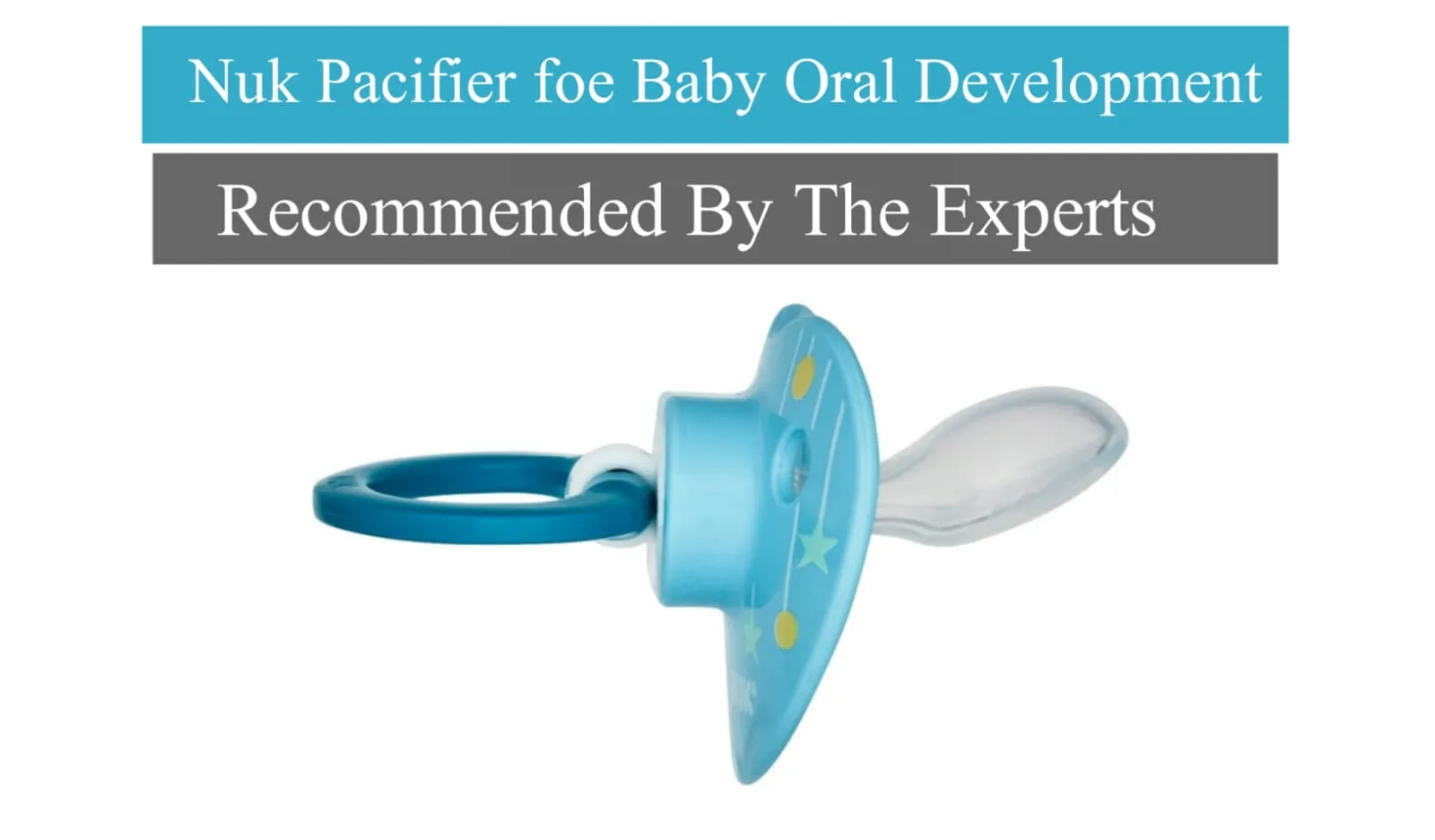
Just as I have noticed, not any pacifier is a creation of equal value. Others can interfere with the feeding, cause confusion to the nipples or even change the position of the teeth. The special feature of NUK pacifiers is that they are shaped in an orthodontic way is the best pacifier, they mimic the natural sucking, and they have various sizes and shapes depending on the age and the development level of the baby. It was during the months that I will be able to learn some useful things that I would have to do to ensure that the pacifier would not only calm my baby but also assist her to develop her oral activities.
The importance of the oral development
The moment when I had a thought of using a pacifier, I was ignorant of the fact that such an impact on the development of the organs could be created. Babies have sensitive structures in their mouth and jaw and sucking patterns may determine teeth, palate and jaw structuring. The NUK pacifiers contain an orthodontic nipple and this is flat on the bottom and rounded on the top and fits the natural shape of the mouth. This reduces the dental hazards in future as compared to the traditional pacifiers.
Oral development that affects feeding also exists. I will notice that my baby was more inclined to breast feeding with the aid of a pacifier that resembled the natural feeling of the nipple. The choice of pacifier that facilitates appropriate sucking reflexes will help in reducing the confusion of the nipple since it will be easier to switch between breast feeding and the introduction of the pacifier. In my situation, I had to be aware of the fact that pacifiers would affect the process of oral development, which became the first step to choose the necessary model of NUK.
Best Choice: NUK Pacifier that is Right to Your Baby
The first thing that I did was selecting pacifier suitable to my baby regarding age and size. NUK pacifiers are categorized as newborn (0-6 months), infant (6-18 months) and toddler (18+ months). I started with the 0-6 months old of my newborn that fitted her and did not hurt her gums. Using the wrong size could be inconvenient, inefficient or even unsafe and I kept on looking at what is suggested at the packaging.
Shape also plays a key role. NUK pacifiers are symmetrical with orthodontics design which encourages the proper positioning of the tongue. Silicone nipple was also soft; hence, it could easily be accepted by my baby even during the period when he was in the fussy mood. The attentive choice of size and shape of the pacifier ensured that the provided product was safe and effective enough to make my baby use it with no complications and assist her in shape development of her oral cavity.
Step 1: Rinse the Pacifier Prior to the use
Even though the NUK pacifiers are highly resistant, I had to soon understand that they need to be inspected before consuming. Infants suck, pull and drop their pacifiers at all times and hence, there is a need to look at them to note the cracks, discolor or wear marks on them. Any harm may become a danger to chokesomely and as such, I would switch pacifiers immediately once I realized something was wrong.
My attention was also on the shield and the handle. NUK pacifiers may be one-piece or be rigidly bedded with shields to ensure that small parts are not lost. It also became customary to check my baby and I am certain that I was sure my baby was using a safe pacifier at all times.
Step 2: Cleaning and sterilizing
I was a hygienic person, especially during the initial weeks of the first four months when my baby was the most vulnerable. NUK pacifiers can be easily washed and I followed a very strict routine: I washed them with warm and soapy water, rinsed it, and boiled several minutes to disinfect. NUK even offers self-sterilizing boxes and they were quite handy both when I was traveling and when I was at home.
Before giving my baby the pacifier, I always make sure that it is sterilized and then it is left to cool. When silicone burns delicate gums it is hot and one should not apply it directly after boiling. My baby was always kept with a clean and safe pacifier because of these cleaning and sterilizing procedures.
The third step: The introduction of the pacifier
Introduction of pacifier is a long process. It happened that it was more worth giving it right after feeding or when my baby was not in action. She would reject the pacifier when crying her eyes out and in the meantime, I would wait until she was calm and at ease. This could be most conveniently done by placing it meticulously at the corners of her lips and letting her suck it.
Of significance was the response of my baby. In case she seemed to be fussy or seemed to be uncomfortable, I removed the pacifier and had another attempt later. Gradually, she learned to think of the NUK pacifier as a comforter and it actually turned out to be an effective pacifying tool and had no annoying or contradictive effect.
Step 4: Pacifier Responsible use
The temptation to use pacifier at every time is there but I was taught to be moderate. I used NUK pacifier mostly during a nap and bedtime, so that my baby could self-soothe, and at the same time to test the other types of comfort. This limitation in usage was to prevent addiction and even continue to have the same sedative effect that pacifiers are supposed to provide.
I also did not have the pacifier as a positive or negative reinforcement. By retaining its purpose neutrality the negative associations were avoided. The pacifier was also not overused, and this was intended to minimize its use, and as such, pacifier was more of a tool than a crutcher to behavior management.
The fifth step is Due Storage and Handling
Storage is not less important than use. I kept pacifiers in a clean dry container not to get contaminated when I was not using them. NUK pacifiers also come with protective cases, and this came in handy especially when I was travelling. This sanitary precaution made the pacifier clean and safe to my baby at all times.
Handling is also not strapping your baby with strings around the neck, which will lead to the death of your baby due to the chances of being strangled. Pacifier safety is also met once they are handled with care and stored in a smart manner in order to minimize the risks.
Step 6: Oral and Dental Progress Observed
The orthodontic design of NUK pacifiers is structured in such a way that they help in healthy development of mouth but I still checked on the arrangement of teeth and jaw of my baby. The shape of teeth or palate can be achieved by using of pacifier with either long usage or of the wrong kind hence I have included the use of pacifier to the regular visits to the pediatrician.
The soft silicone material and the ergonomic shape of NUK pacifiers also assisted in reducing the nipple confusions as well. My baby could self-feed and did not have problems with switching the pacifier and breast. Pacifier in my case was not harmful and safe in terms of development because of monitoring and limiting.
Step 7: Replacement of the pacifier at what age
Sturdier pacifiers wear out with time. I replaced my NUK pacifier after 2-3 months or immediately when I noticed that it had cracks, got soft and discolored. Constant rotation was a hygienic and comfortable change.
This routine caused by its frequent replacement, cleaning and inspection made it less dangerous. Frequencies of such steps made the use of pacifier to be stress free and not a threat to my baby.
Action 8: Going out with a pacifier
The travelling is accompanied by new hygiene and safety concerns. I always carried an additional NUK pacifier in its sterilizing case and this allowed me to comfort anywhere without the issue of germs. The strength of this design also enabled it to last long as was often used and thereby facilitate the outings.
After outings or trips I would wash the pacifier in warm water to remove all the contamination. It was planned and maintained well and the comfort was always available at all times irrespective of where we were. The practices made it easy and safe to carry a pacifier after the practices.
FAQs of NUK Pacifier for Baby’s Oral Development Guide
Final Thoughts
It is not only about acquiring the most convenient pacifier that will calm your child down, but also about the task of assisting with the correct formation of the mouth, and even safety. NUK pacifiers are developed in a natural manner, to be durable and to be formed with orthodontic forms that makes them a money maker with the infants and newborns. I was able to calm my baby and promote healthy development by means of adequate clean, storage, and use techniques. When used properly, a NUK pacifier can be a life-saver, to both the baby and the parent, both of them can easily and confidently adjust to the first few months.