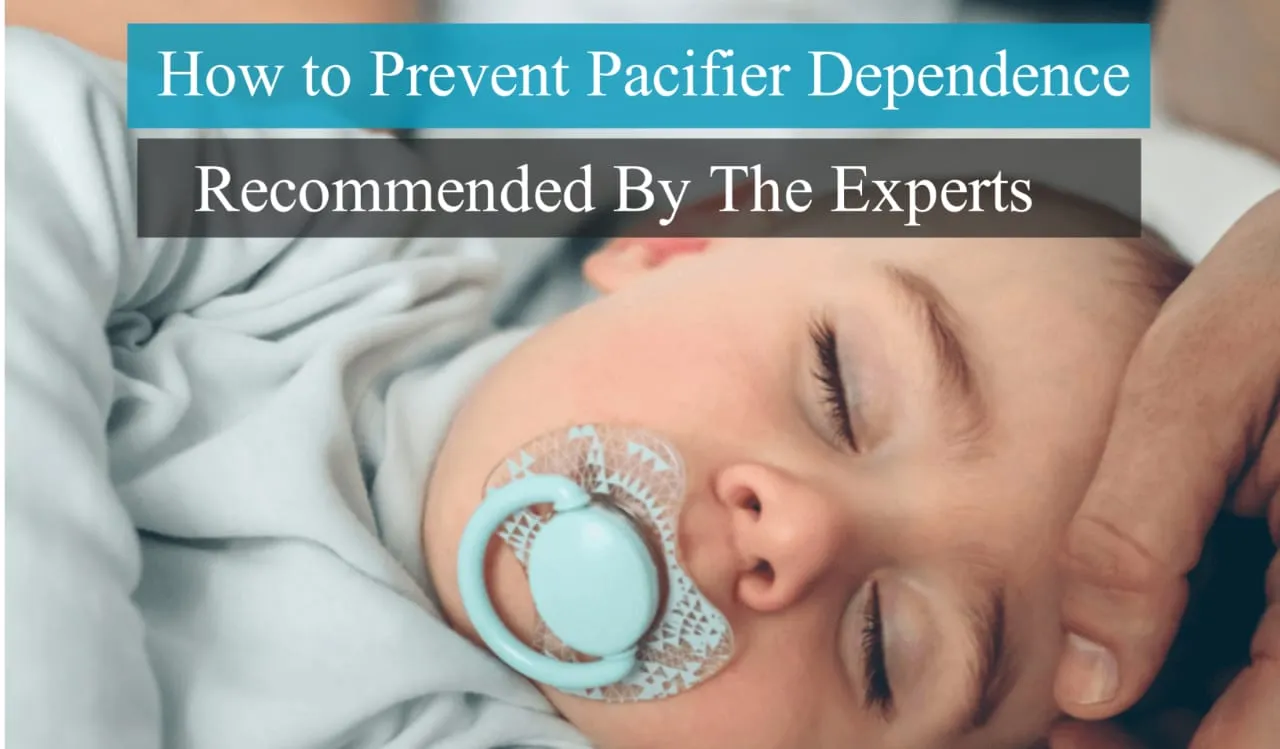
How to Prevent Pacifier Dependence While Still Soothing Your Baby
Learn how to prevent pacifier dependence while soothing your baby. Tips on healthy use, self-soothing, oral growth, and gentle weaning strategies.
Finding balance is key. The best pacifier does not need to be fully removed in order to prevent problems in the future. Rather, you may utilize it as a useful calming device as you impose restrictions that limit the over-reliance of your child on it. This is the best way to have the benefits but not the stress of being dependent because you are now able to take care of you and the baby.
You as a parent understand how pacifier is soothing at times of bad temper in your baby who will not fall asleep. The sucking reflex is soothing and can be used instantly to soothe a baby, lessen crying periods, and can even make some babies fall asleep sooner. But beyond the comfort, there is an issue, which is over dependence on pacifiers. When babies get overdependent it can interfere with their oral maturation or cause them to have difficulties with sleeping when they are unable to locate the pacifier independently.
Gaining insight into Pacifier Dependence.
Pacifier dependence is acquired when babies or toddlers need the pacifier in order to sleep, soothe down, and cope with all minor inconveniences. It increases to become less of a tool, more of a crutch. It comes instinctively to most children, as sucking is among the first reflexes, yet prolonged with increased use of pacifiers may turn into a habit that is harder to get rid of later.
This dependency may be manifested in minor forms. Other infants will cry every now and then at night until the pacifier is reinserted. Other people will not be able to self-soothe and this frustrates the parents. When you understand these indicators at the first signs, you can do something to avoid the development of the pacifier into an indispensable need.
The Reason Why Parents use Pacifiers.
One should not ignore the reason why pacifiers are still popular among parents. They lower the chances of sudden infant death syndrome (SIDS), offer a soothing effect during the teeting process and also soothe babies in stressful situations such as airplanes or busy places. To most families, the pacifier is not merely an item, but a savior to the times of need.
Nevertheless, the positive aspect should not shadow the necessity of responsible consumption. Being deliberate about the timing and frequency with which your baby suckles the pacifier would help experience the calming influence without creating a habit that is difficult to break. Pacifiers will be one of the numerous comfort measures which cannot be the sole one.
Establishing Healthy Boundaries at an Early Age
Dependence can only be avoided by setting boundaries at the onset. Restricting the use of pacifier to some events like nap time, bedtime, or especially stressful outing, teaches your baby to associate it with comfort in a particular situation and does not mean that he has to have it all the time.
Other methods of soothing that parents may showcase include swaddling, rocking, or swirling some white noise. When infants are subjected to various forms of relaxation, they do not over rely on a pacifier as the only pillar to lean on. Early-formed boundaries are ones that are easier to keep as your baby develops.
Encouraging Self-Soothing
Self-comforting is an important competency that can make babies manage emotions and sleep healthier. A pacifier would be good in the short run, but the children should also be taught to calm down without necessarily sucking. Giving them autonomy to explore their hands or play with a warm blanket may develop autonomy in comfort.
To promote this you can sometimes calm the baby by not giving the pacifier. Rocking, humming, or light touch can also be as comfortable and it will make the routine more balanced. With time, these techniques make him less and less dependent on a pacifier and make him learn how to deal with the discomfort differently.
Choosing the Right Pacifier
Not every pacifier is a creation of equal value. You can reduce risks by selecting one that will promote oral development in case your baby will use it regularly. Find the orthodontic pacifiers with the aim of facilitating natural movement of tongue and jaws. The materials that are soft, BPA-free and sizes are also important to consider in making the correct choice.
It is also possible to offer multiple safe choices to make sure that your baby will not get attached to a particular pacifier. The process of alternating between two different styles will help to minimize the danger of emotional attachment to one object and facilitate the weaning process in the future.
Timing is Everything: When and How to Use the Pacifier
When the use of pacifier is timed, it can be the difference between dependence or not. Take it not off at every cry. Rather, attempt to calm your infant using the alternative methods. In case those ones fail, then the pacifier should be the next comfort technique.
When you save the pacifier as the last resort when all other options have failed, you avoid making your baby grow to believe that it is the fall-back position. This conscious timing will decrease the habitual use and will also make your child learn that comfort is not limited to sucking only, but it can also be found in other things.
Slowly Fade Away Growing Old
The use of pacifier should decrease as your baby grows. Experts suggest that the weaning process should start at about 12 to 18 months which is the time when speech development matters. A modification of this behavior is best achieved in a gradual way, therefore consuming less of it throughout the day and leaving it at bedtime when needed.
You can also eventually restrict the use of bedtime. You can ease the process of getting your child to give up the pacifier by gradually eliminating it as opposed to simply removing it. This method will keep you out of meltdowns and it will enable your baby to move away towards self-soothing ways easier.
Developing Positive Associations in the Absence of a pacifier
When pacifier is already a habit, it is necessary to replace it with other positive alternatives. Provide comfort materials such as a favorite blanket, stuffed toy or moody bedtime routine. These new associations are comfortable and no sucking is necessary.
Comforting rituals, including a bedtime story, a massage, or a lullaby, can also be implemented by the parents. With time, these activities prove to be as efficient in calming your baby as was the pacifier at some point in the past. Such a change will help you to become less dependent yet have a happy baby and one that is safe.
FAQ’s of How to Prevent Pacifier Dependence
Concluding Remarks
Pacifiers may be a helpful element in pacifying infants, yet they cannot turn into the sole means of comfort. You can avoid dependence and still reap the relaxing rewards by putting limits, promoting self-calming down, and using other ways of comfort. All infants are unique and one should be open to changes, but structure in your style is very crucial.
Pacifiers can be a helpful tool in the case they are used responsibly and they do not pose any difficulties in the long run. In a moderate way, you will have the right to indulge your baby in calming moments and you will be at peace knowing that you are supporting oral development, emotional wellbeing and independence.